
 Oct 14, 2026

Every year, growth-stage companies enter planning season with ambitious revenue targets, expanding departmental budgets, and assumptions about what the next 12 months will bring. Then Q2 arrives, and the cracks begin to show. Sales productivity falls short, pipeline doesn't convert as expected, product releases slip, and leadership teams find themselves revisiting a plan that was only finalized months earlier. What if the problem isn't the forecast itself, but how companies approach planning in the first place?
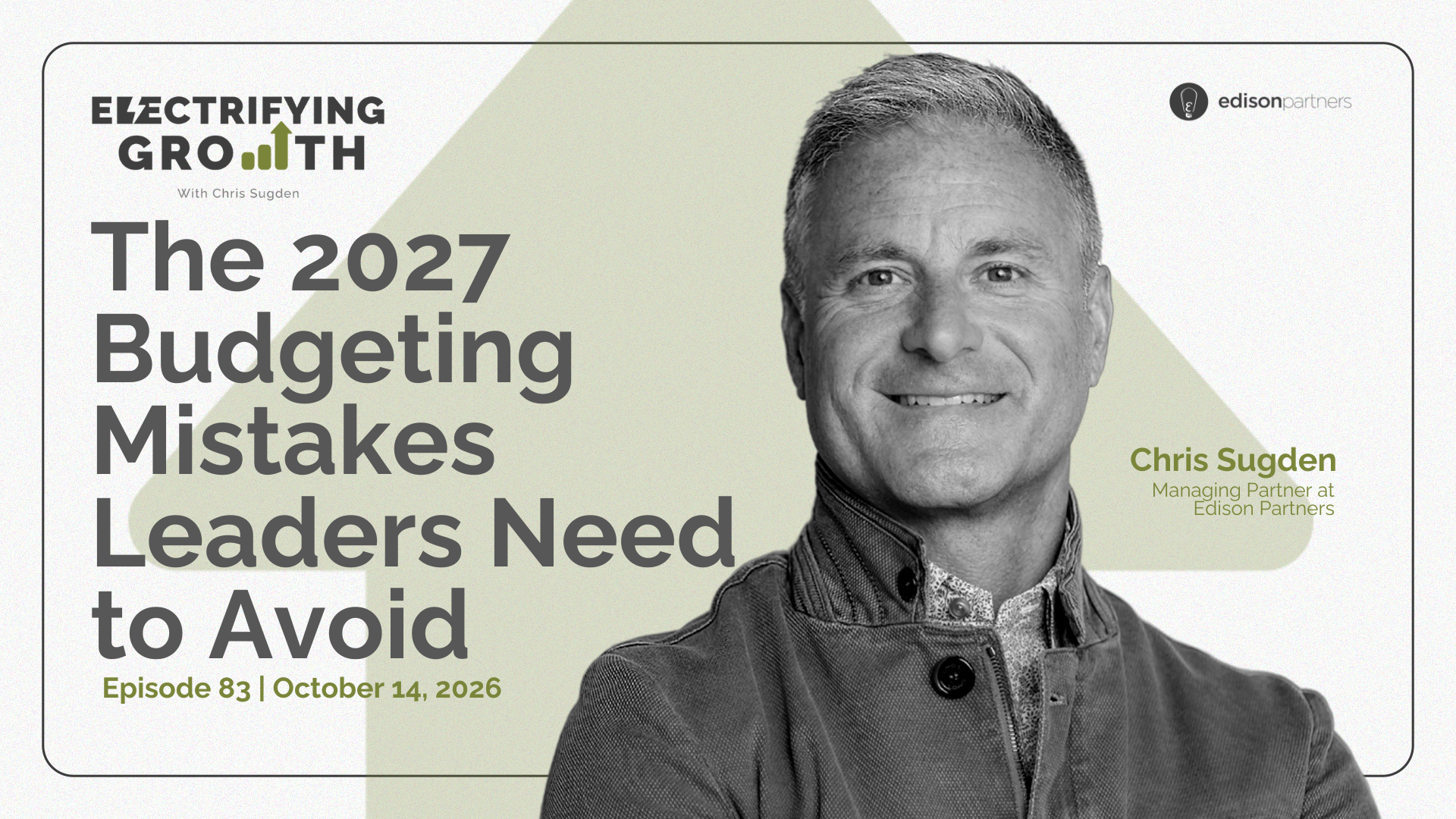
In this episode of Electrifying Growth, Managing Partner Chris Sugden shares his perspective on building a more disciplined operating plan for 2027. Drawing on his experience as both an operator and investor, Chris challenges CEOs and CFOs to revisit the assumptions behind previous budgets, rethink incremental spending through zero-based budgeting, and establish measurable expectations for AI-driven efficiency. Rather than asking department heads what they need, he argues that leadership should define what the business needs to accomplish and challenge teams to deliver it more productively.
Chris also explores how a company's growth trajectory influences its access to capital, why slower-growing businesses face a different standard of proof from investors, and the importance of aligning with the board before committing to next year's plan.
The message is simple: Don't just plan for 2027. Plan how you're going to plan.
Interested in guest-starring on Electrifying Growth? Apply Here to be a guest!
