
 Jun 08, 2026
.png)
For years, growth-stage companies have prioritized speed as a competitive advantage, rewarding rapid scale and aggressive execution. But today’s environment looks different. Capital is more expensive and more selective than it has been in over a decade, raising the standard for what constitutes a durable growth story.
In our AI-forward world, where competitive advantages emerge and erode faster than ever, "move fast and break things" has become a luxury that growth-stage companies can no longer afford. Misaligned teams create delays, poor prioritization wastes resources, and organizations relying on intensity alone create friction when speed outpaces coordination. Growth-stage companies are being asked to do more, with less, faster.
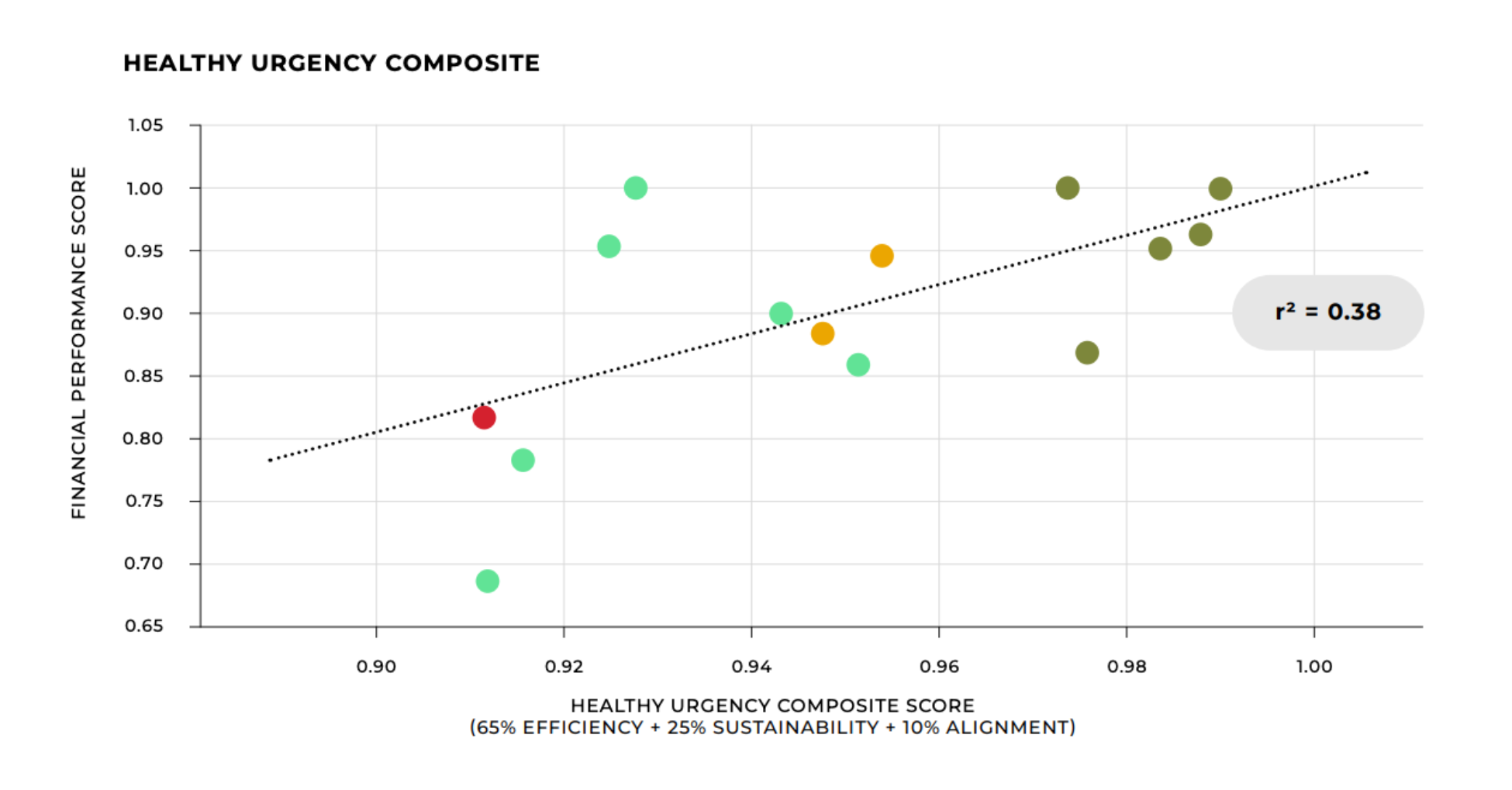
This is where the focus of our 2026 Growth Index, Healthy Urgency, enters the picture. We define Healthy Urgency as the organizational condition where leaders execute against shared priorities with enough intensity to drive results and enough discipline to sustain the pace. Healthy Urgency is what sets apart the teams who consistently and predictably hit their numbers from those who do so via heroics and burnout; perhaps more importantly, our research shows that Healthy Urgency is positively associated with stronger financial performance scores.1
We set out to understand how the best growth-stage companies translate urgency into execution quality. Our conclusions brought to light three organizational behaviors, each of which demonstrates only a modest relationship with financial outcomes independently, but becomes increasingly informative when combined.
Dimension 1: Alignment
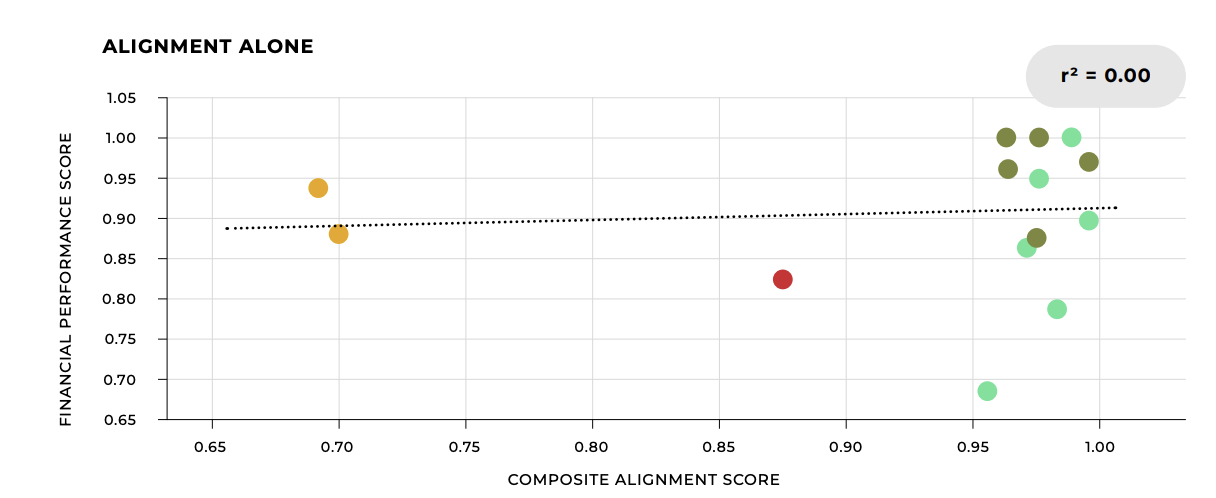
Measured by priority overlap methodology across survey respondents, the alignment behavior asks whether leadership teams agree on priorities, resource allocation, and performance expectations.
While important, it is relevant to note that alignment has the weakest standalone correlation (see the graph below) with financial outcomes in this dataset, suggesting that alignment is not a differentiated driver on its own, but rather a foundational prerequisite for Healthy Urgency.
To measure alignment within your organization, ask:
- Is my leadership team pointing in the same direction?
- Do my CEO's priorities independently match the priorities named by our executive leadership team and board—without coordination?
Alignment alone does not guarantee strong performance. Organizations can remain highly aligned around ineffective strategies. Lack of alignment, however, introduces inefficiency to execution.
Dimension 2: Sustainability
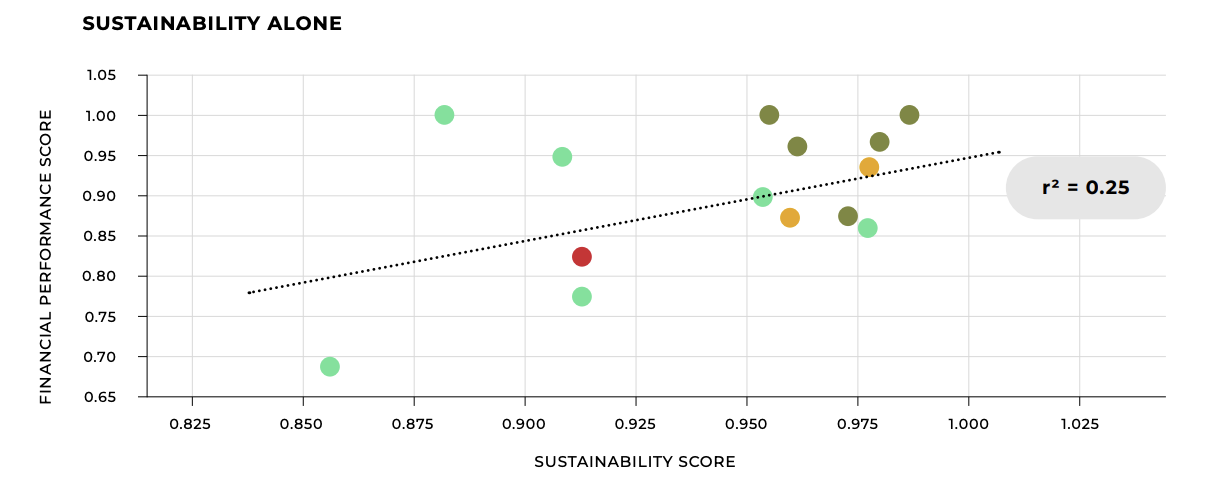
The second behavior, sustainability, distinguishes organizations that are drawing down assets from those building them, separating temporary performance from durable performance.
Our findings show that many organizations rely on reactive execution and bursts of intensity to drive short-term results.
To measure sustainability within your organization, ask:
- Can my team maintain its pace over the next 12-18 months without burnout?
- Does my current execution rhythm allow for proactive customer management or create firefighting?
Dimension 3: Efficiency
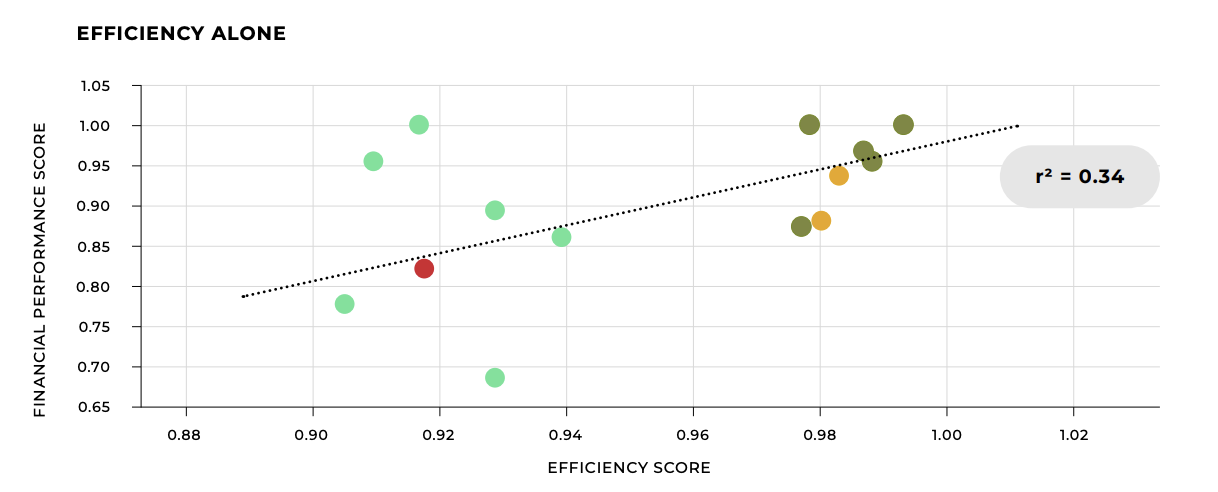
Efficiency is the behavior most correlated with gross and net revenue retention. It measures whether organizations successfully convert effort into measurable outcomes.
Our findings show that companies that say they convert spend into results retain and expand revenue at higher rates.
To measure efficiency within your organization, ask:
- Do we convert inputs into outputs?
- Are high-priority initiatives completed on their original timeline?
- Does increased spend produce measurable performance lift within two quarters?
This analysis will reveal where resources generate value and which initiatives deserve continued investment.
The Healthy Urgency Composite
As shown in the figures above, the standalone correlations between each survey dimension and financial performance are modest: Alignment r² = 0.00, Sustainability r² = 0.25, Efficiency r² = 0.34. None of these alone is a strong predictor of financial success. This is not a weakness of the framework; it is proof of its premise.
If any single dimension were sufficient, Healthy Urgency as a concept would be unnecessary. The fact is that efficiency without sustainability burns teams out, that alignment without efficiency produces strategic clarity with no execution, and that sustainability without alignment exerts energy in the wrong direction – and this is exactly what the data reflects. It is only when the dimensions are layered that we see a meaningful correlation with financial performance.2
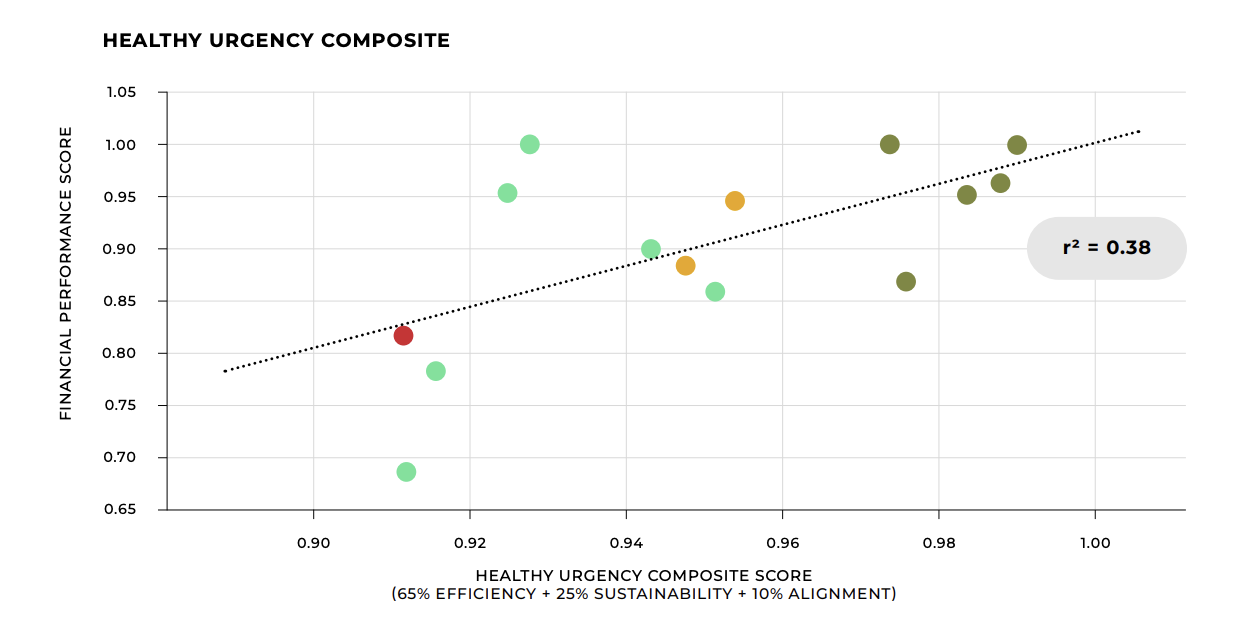
Healthy Urgency matters because today's market offers less room for inefficiency. Capital allocation faces greater scrutiny while customer expectations continue to rise and AI accelerates the speed of competition. The organizations best positioned to succeed are those able to execute with efficiency, sustainability, and alignment.
Healthy Urgency reframes execution as more than pace alone. Organizations that maintain coordination, while continuing to execute efficiently, convert effort into durable performance over time.
Download the 2026 Growth Index to learn more.
1For purposes of the 2026 Growth Index, financial performance scores are calculated as weighted composite scores across five key metrics: Net Revenue Retention (NRR), Gross Revenue Retention (GRR), Revenue Growth, EBITDA Margin, and Logo Retention.
2The weighting of 65/25/10 Efficiency/Sustainability/Alignment in the Composite reflects what the data shows about which dimensions carry the most predictive weight. It is presented transparently, not as a black box. As the sample grows with continued tracking over time, these weightings will be recalibrated.

